Published March 16, 2026
Rio?s Botanical Garden Is One of the Calmest, Strangest Highlights of the City
Rio?s Botanical Garden Is One of the Calmest, Strangest Highlights of the City
Brazil has one of the most diverse ecosystems in the world, so coming into the botanical gardens, especially in one of Brazil?s biggest cities, I was expecting to see some really wild, almost overwhelming plant life. And I definitely did see interesting plants. But it wasn?t quite as crazy as I had imagined. Maybe I just didn?t find the most extreme ones.
That ended up being part of what I liked about it. The Rio de Janeiro Botanical Garden, founded in 1808, is both a historic garden and a research institution, which helps explain why the visit feels less like walking into a jungle and more like moving through a curated landscape. Rio?s Botanical Garden is also known for its imperial palms, orchid and bromeliad collections, and the giant water lilies at Lago Frei Leandro.
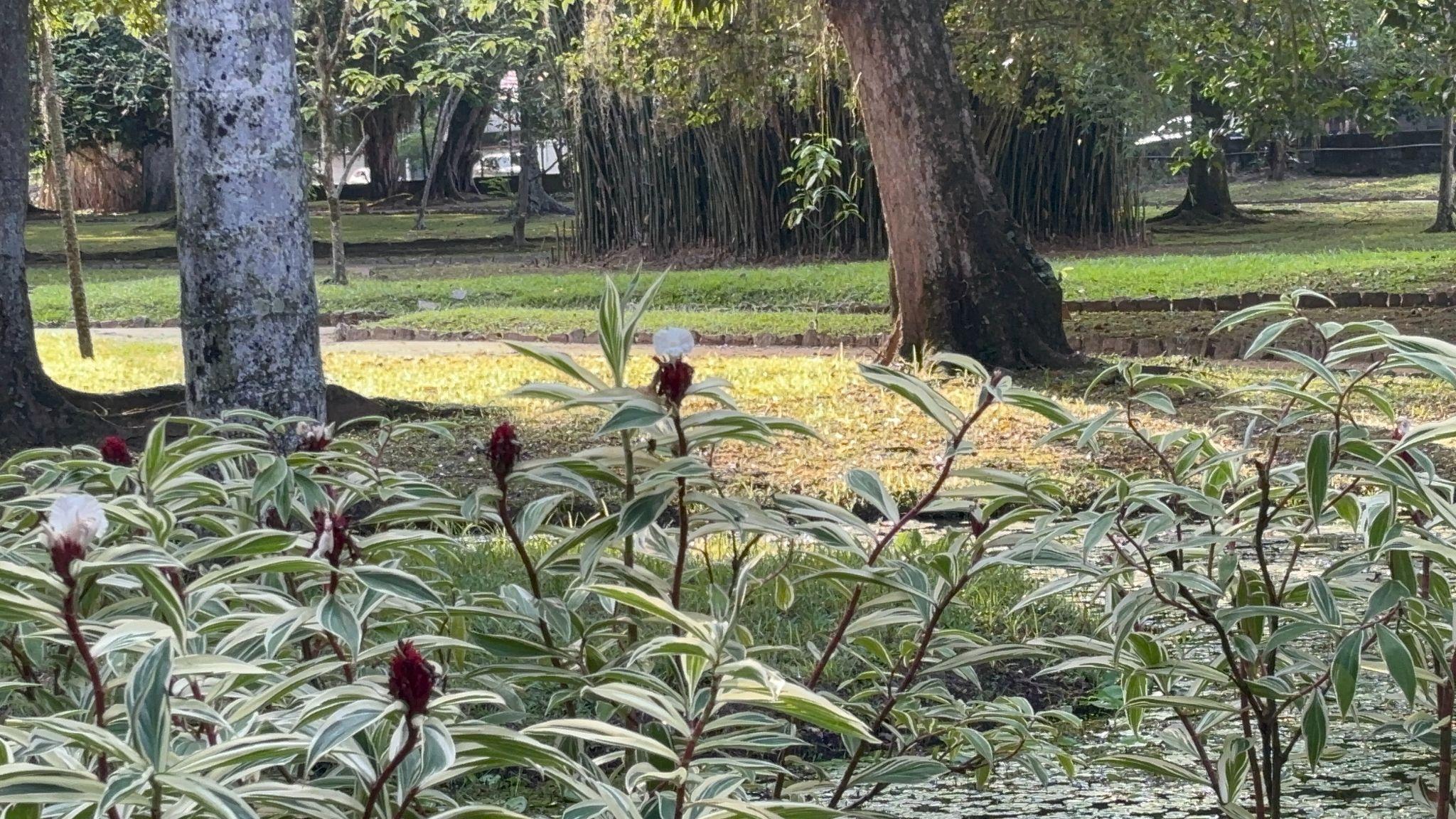
The beauty isn?t captured in the photo but the dark reds and whites of this plant where especially beautiful
The pleasure of wandering
I think one of the most enjoyable parts of the garden is just wandering aimlessly and getting a little lost. When the path splits, you naturally start to feel which direction pulls you more?whether it?s the light, the density of the plants, or even how many people are there or not there. It makes you think about what actually determines those choices, not just physically in a space like this, but more broadly. Sometimes it feels intentional, and sometimes it?s just random.
One surprising thing is that you?re not allowed to lay on the grass. You have to stay on the paths, which felt a little surprising for Brazil. The reason they gave was that snakes can be in the grass, which, fair enough, also changes how you interact with the space.
When you get closer to the edges of the garden, you start to feel the city again. But for most of the time, it feels pretty removed. It?s calm, almost insulated.
Honestly, it ended up being one of the highlights of Rio. The city is known for beaches, nightlife, and culture in that sense, but in terms of quieter, more institutional experiences?something closer to museums or curated spaces?the botanical garden is definitely up there as recommendations.
The atmosphere shifts depending on where you are. Some sections feel more humid, more enclosed by trees, while others open up a bit. That variation keeps it from feeling monotonous. One thing that stuck with me even a week later is the scale?the height of the trees?and the intensity of some of the patterns in the plants.
I spent about two to three hours there, which felt about right. I?d definitely put it on a to-do list for Rio. When I went, tickets were 20 reais for students in Brazil and 80 reais otherwise. Overall, definitely worth it.
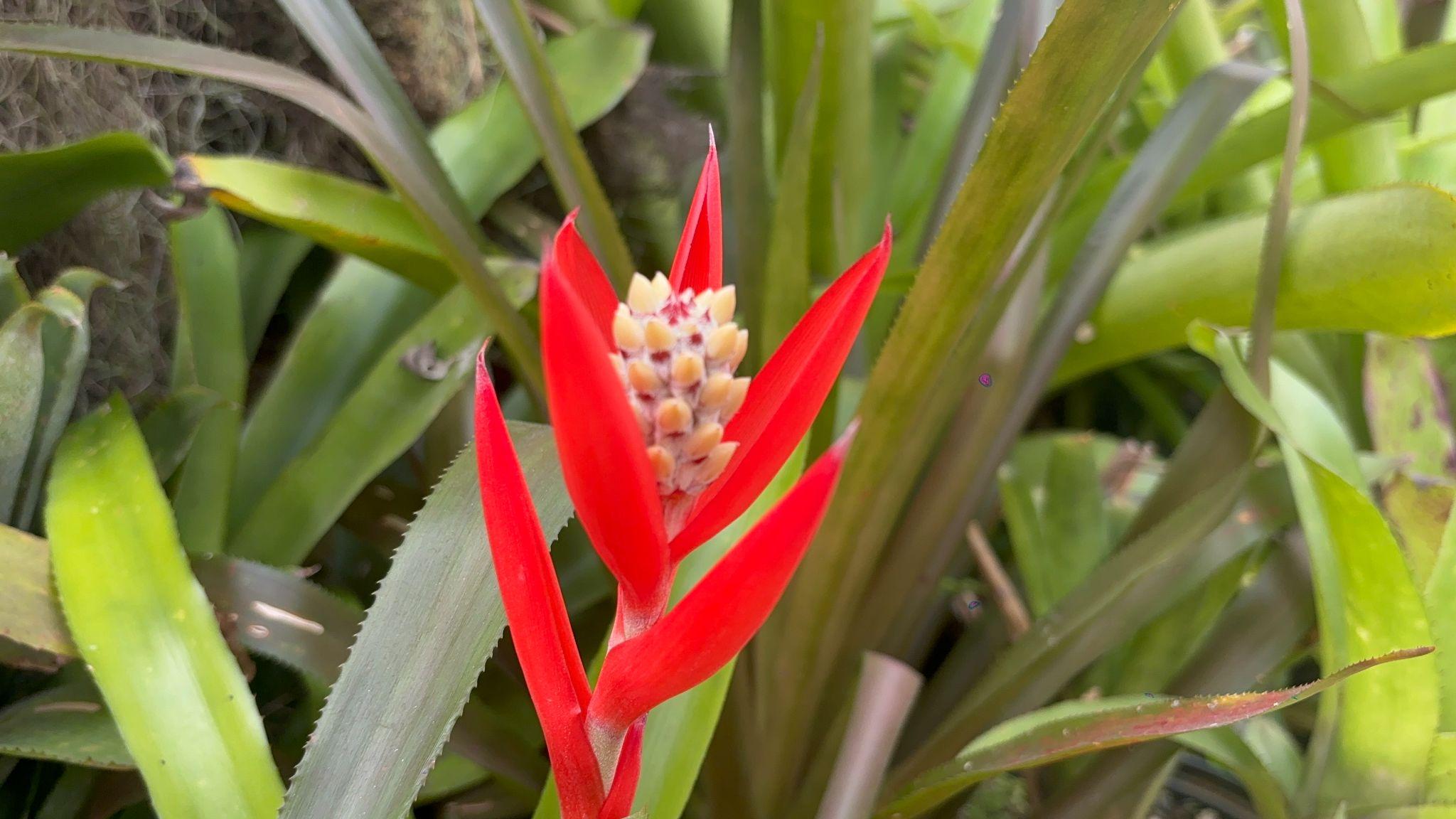
Red flowering bromeliad (exact species uncertain): likely another ornamental bromeliad rather than a heliconia. The ID is best treated as probable without the garden label.
The plants that stayed with me
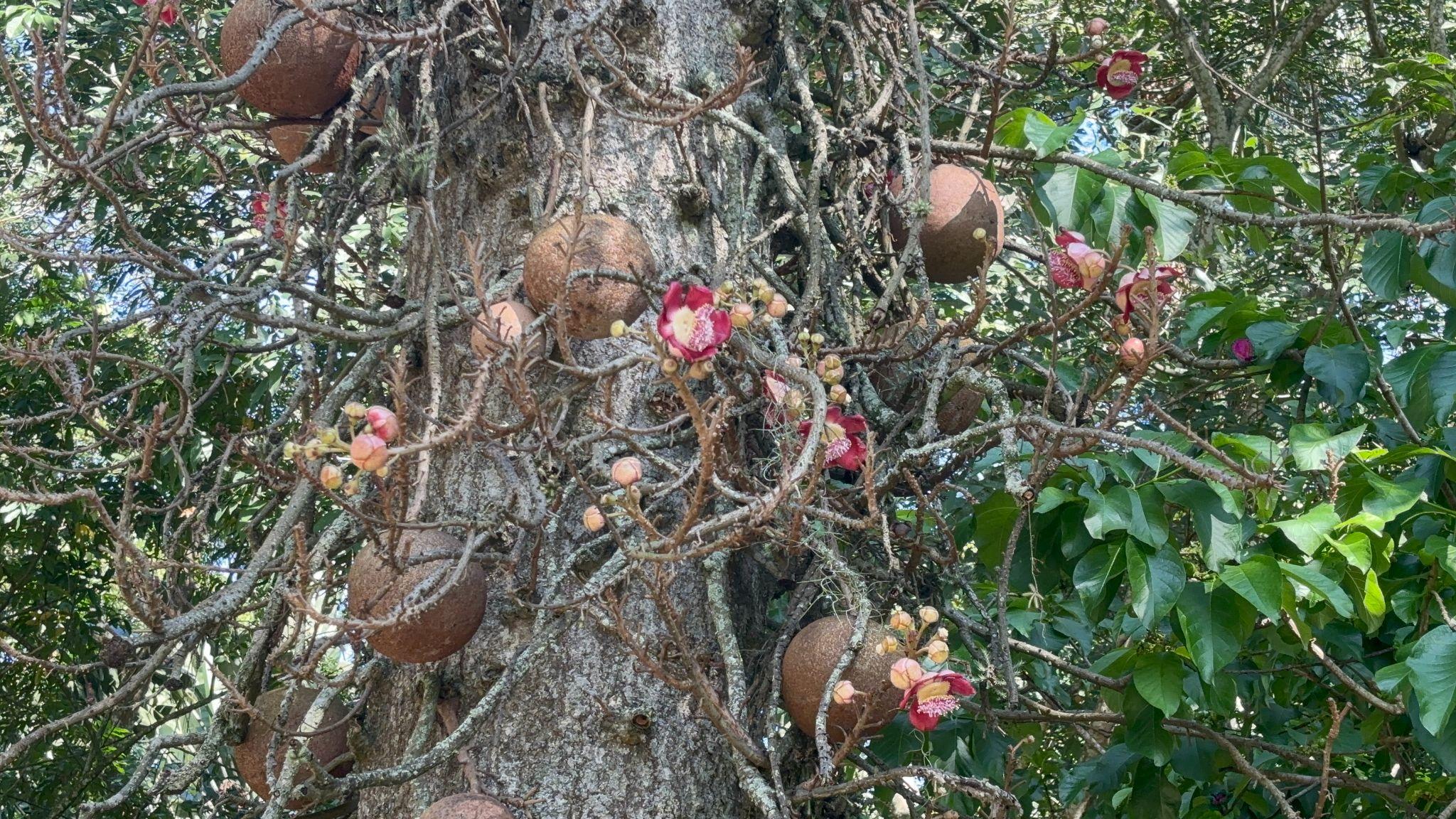
Cannonball tree (Couroupita guianensis): tropical South American tree with woody fruits borne directly on the trunk. (powo.science.kew.org)
The first one that stood out to me was the tree with fruit growing directly off the trunk. It was strange because the tree itself looked very dry and brown, almost dead at first glance. Then you notice these hardened, shell-like fruits, and right next to them are these really vibrant red flowers. So it?s clearly alive and actively growing, even though it doesn?t look like it at first.
You don?t usually see that kind of contrast?different textures and states all in one place. It almost didn?t feel natural. This tree, especially, reminded me of something out of Dr. Seuss because of how unusual and slightly surreal it looked.
That tree appears to be the cannonball tree (Couroupita guianensis), a tropical South American species known for producing large woody fruits directly from the trunk and for its striking flowers. (powo.science.kew.org)
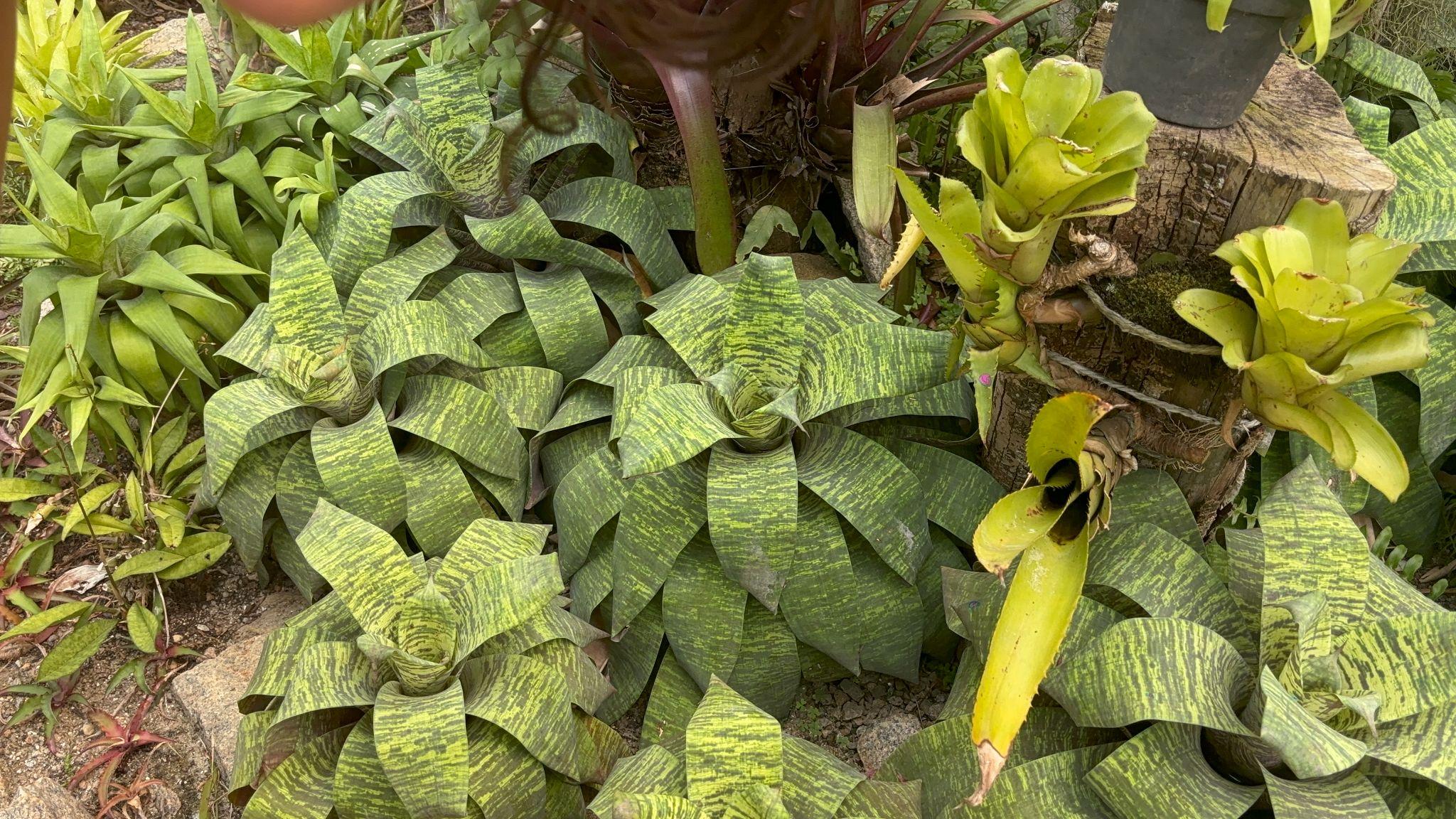
Patterned bromeliad (strongly resembles Vriesea hieroglyphica): Brazilian bromeliad known for its dark striped foliage. (powo.science.kew.org)
The bromeliads also stood out. You don?t usually think of plants as holding water. I almost expected the inside to feel sticky or syrupy, but it?s just water. And they weren?t isolated?you see them in multiple places throughout the garden. What was particularly interesting is how they?re structured. It?s almost like a whirlpool or a bullseye, where your eye naturally gets pulled toward the center, especially with that red coloring. It also makes you think about whether animals come up to them to drink from the center.
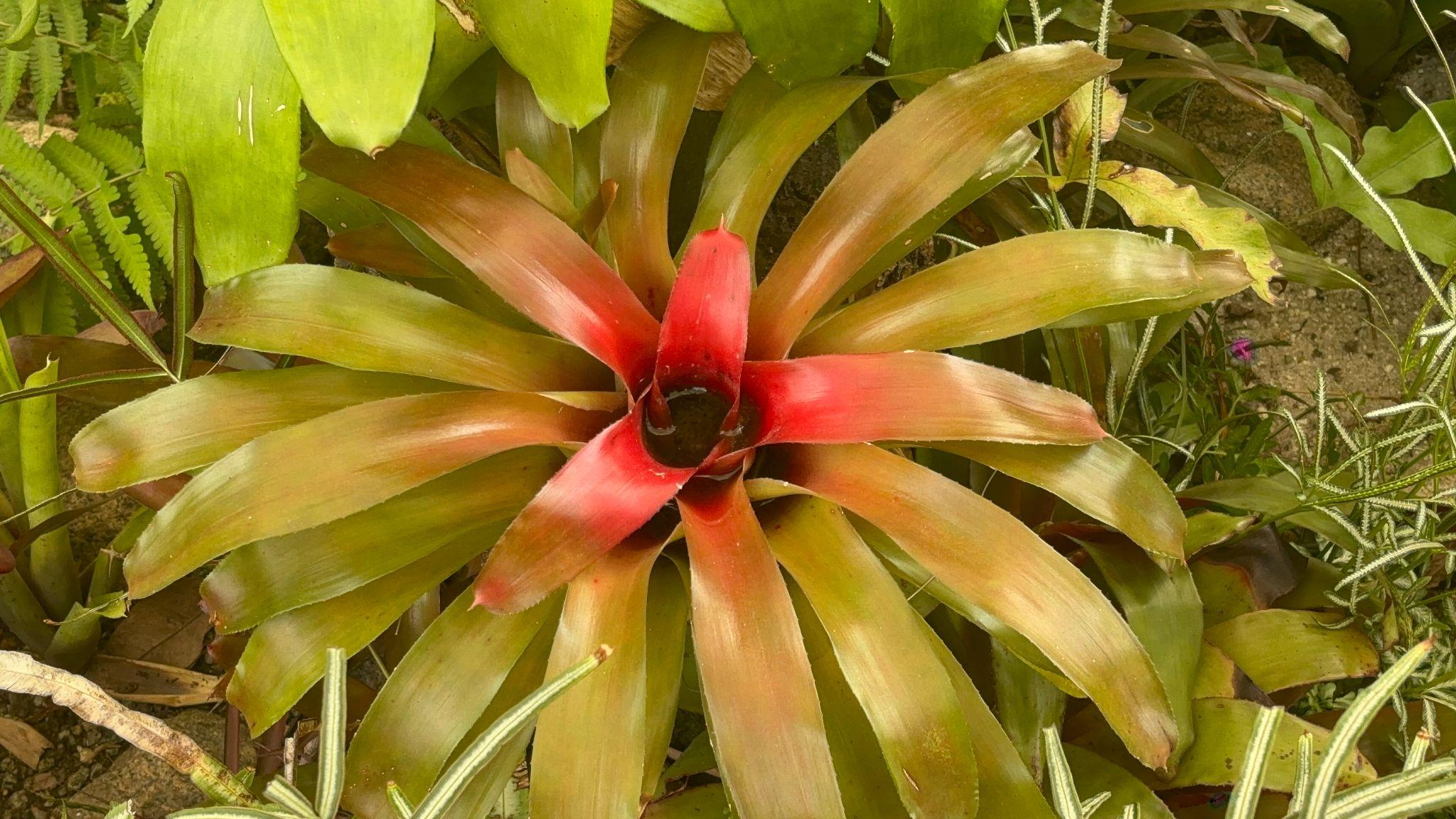
Red-centered bromeliad (likely Neoregelia): tank-forming bromeliad with a water-holding rosette; Neoregelia carolinae is native to southeastern Brazil. (missouribotanicalgarden.org)
One of the red-centered bromeliads in my photos looks like a Neoregelia type, likely close to Neoregelia carolinae, a Brazilian bromeliad that grows in a funnel-shaped rosette and often blushes red in the center. Another patterned bromeliad in my photos strongly resembles Vriesea hieroglyphica, a Brazilian species known for its striped, almost hand-drawn leaves. The garden?s bromeliad collection is important enough that the institution describes the Bromeliarium as a conservation-focused reference point, and it regularly stages orchid and bromeliad events there. (missouribotanicalgarden.org)
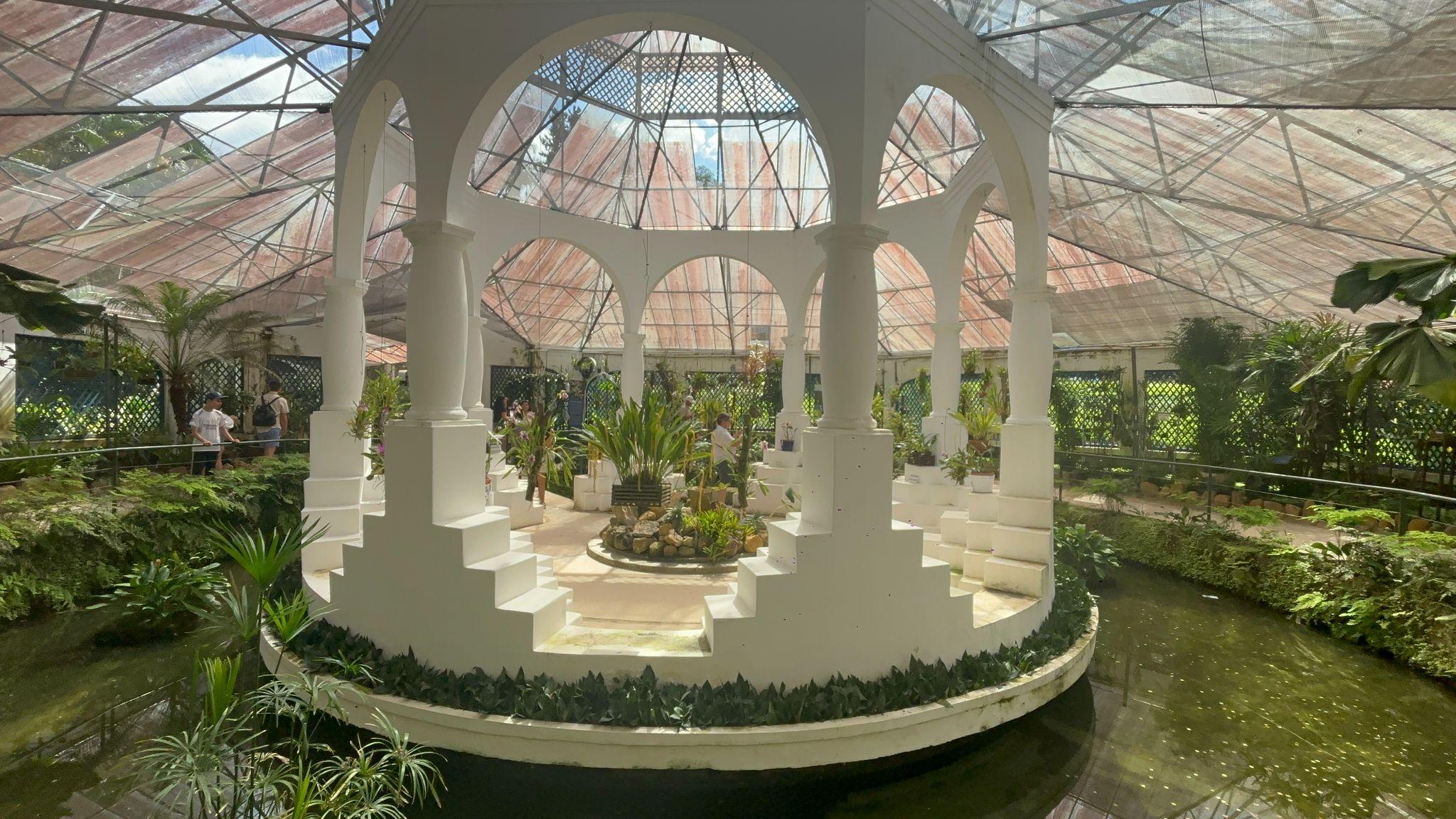
Beautiful gazebo but couldn?t sit on it :(
Another bright red bromeliad inflorescence felt a bit surreal because of the patterns. You don?t really see shapes and colors like that very often, and it stands out in a way that almost feels designed rather than natural.
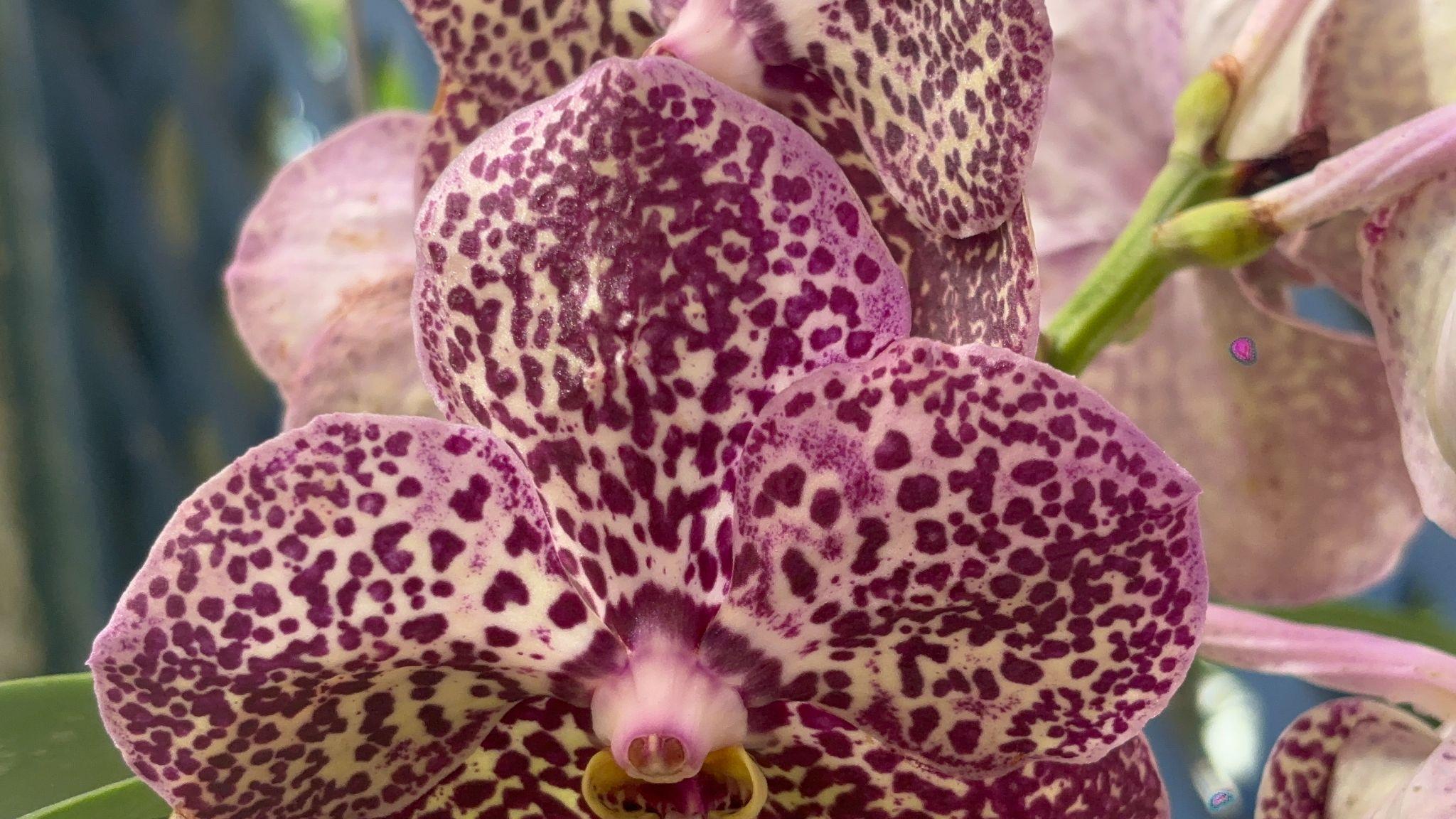
Spotted orchid (likely cultivated hybrid, probably Vanda alliance): exact cultivar uncertain from the photo alone.
Then there were the orchids. Orchids are always beautiful. They?re one of those plants that consistently feel ornamental, no matter where you see them. The spotted orchid in my photo looks like a cultivated hybrid, probably in the Vanda group, though that part is my best visual guess rather than something I can verify without a label. (gov.br)
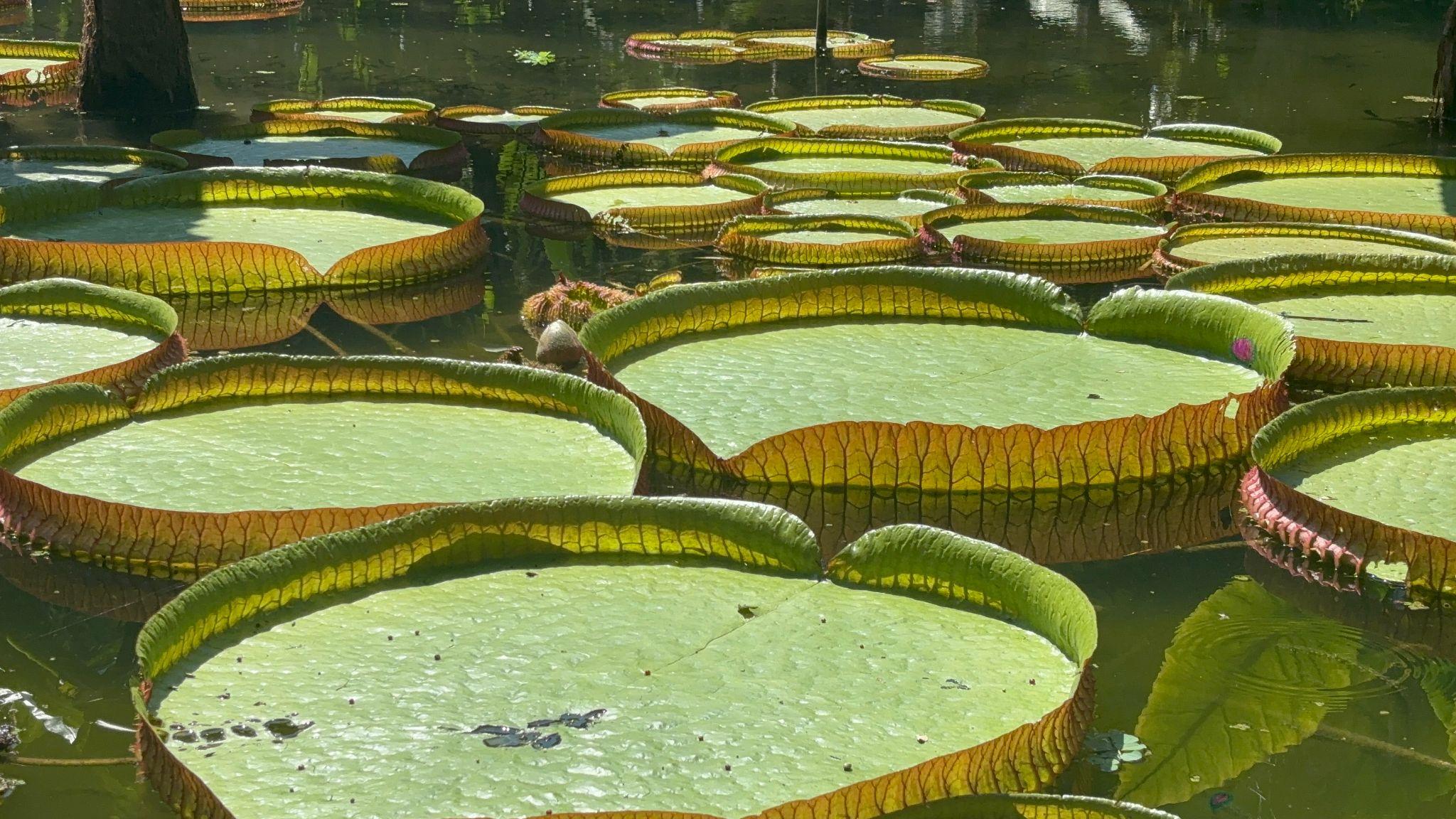
Giant water lily / vit?ria-r?gia (Victoria sp., likely close to Victoria amazonica): enormous floating leaves native to tropical South America. (missouribotanicalgarden.org)
And then there were the giant water lilies. These were one of the clearest reminders that botanical gardens can still surprise you on scale alone. The leaves look almost implausible in person. The giant water lily in the photos is the vit?ria-r?gia group, likely Victoria amazonica or a closely related Victoria species. The Rio garden?s Lago Frei Leandro is also known as the vit?ria-r?gia lake because it houses large numbers of them. (missouribotanicalgarden.org)
Is it worth going?
Yes. Not because it?s the wildest thing in Rio, and not because every corner feels like the most beautiful thing, but because it gives you a different register of the city.
Rio has places that are louder, more instantly dramatic, and more iconic in the usual sense. The Botanical Garden works differently. It slows you down. It makes you notice texture, pattern, humidity, shade, scale, and the way a path can pull you somewhere for no real reason except that it feels right.
If you like plants, photography, wandering, or just having a quiet counterpoint to the rest of Rio, it?s worth going. If you want only the biggest spectacle possible, you might find it more subdued than expected. But even then, the scale of the trees, the strangeness of the cannonball tree, the geometry of the bromeliads, and the giant water lilies are enough to make the visit memorable.